
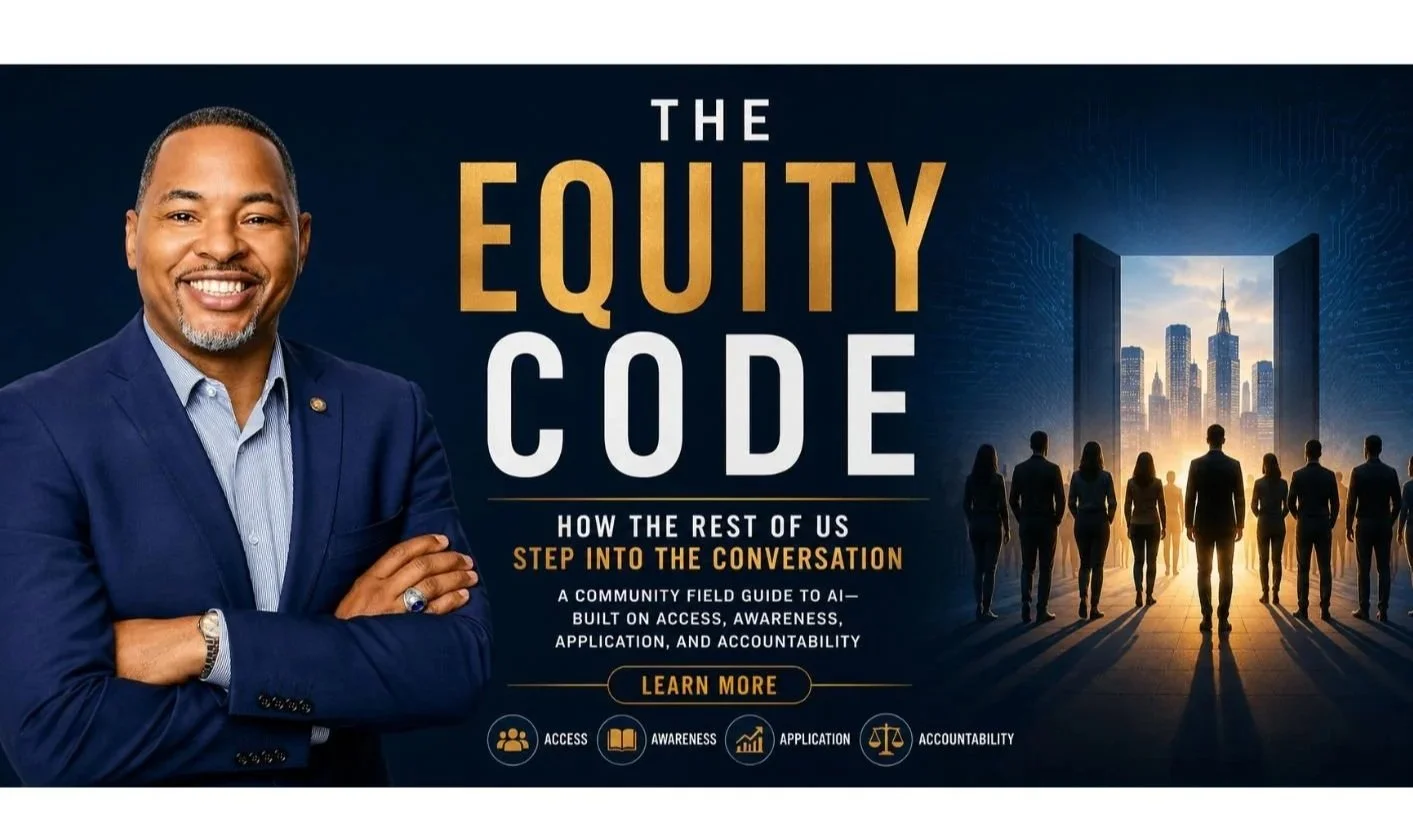
This page was designed with you in mind.
“An ecosystem for closing the wealth, health, and education gaps.”
Not the AI insider. Not the Silicon Valley engineer. Not the consultant with three certifications and a LinkedIn post a day about prompt engineering.
You.
The professional who has been quietly nodding in meetings, hoping nobody asks. The veteran, the pastor, the community leader who has carried other people’s weight for years, and is wondering whether you have one more chapter in you. The mid-career skeptic who has seen enough hype cycles to be cautious — and is right to be cautious, but cannot afford to stay outside this one.
The single mom is running her business from her phone. The teacher is in the back row. The grandfather, who never finished college, is still helping with homework. The neighbor who keeps the block together. The person who has been told, in a hundred small ways, that this conversation isn’t for them.
It is. It always was. And you are right on time.
What Is the Equity Code…
A code carries two meanings, and this one carries both on purpose.
The first is the meaning that the technology people use. Code is the underlying set of instructions that makes a system run. You don’t see it. You see what it produces. But the code is what’s actually deciding the behavior of the whole machine.
The second is older. Warriors, leaders, and people of faith have always used it. A code is a code of conduct. A way of being. A standard you hold yourself to, especially when nobody is watching, especially when it costs you something.
The Equity Code is both at once. The technical code without the conduct code is just optimization — and history is full of systems that ran efficiently toward harm. The conduct code without the technical code is just good character with no leverage — a decent person watching a machine get built around them, with no hand on the instructions.
You need both. The instructions and the integrity. The leverage and the line.
That is the code this whole movement is built on. It has four pillars — Access, Awareness, Application, Accountability — and one aim. Equitable access to resources until our communities reach balance. Not charity. Not pity. Access. The same baseline of wealth, health, and education that the kid across town gets, the kid in our old neighborhoods gets, too.
We are not there. We have never been there. The Equity Code is the discipline of refusing to stop until we are.
What AI Can Actually Do
Let me say this plainly, because the noise around AI has gotten loud enough that the truth is hard to hear.
AI is not a savior. It is not going to rebuild a school system. It is not going to replace a hospital. It is not going to fix zoning law or end the property-tax loop. The structural work still needs to be done.
But for the first time in modern history, a meaningful portion of the expertise that used to require a wealthy neighborhood, an elite school, or an exclusive network is now available to anyone with a smartphone and a connection.
A kid in a struggling district can reach tutoring that his classroom can’t afford.
A small business owner can reach marketing knowledge she couldn’t pay a consultant for.
A community organizer can reach grant-writing help she didn’t have last year.
A parent who never finished college can sit at the kitchen table and help with homework, even though they thought they had nothing to offer.
A pastor can translate a sermon. A contractor can win the proposal he kept losing. A nurse can draft the letter she has been putting off for months.
None of that, by itself, closes the gap. But for once, the tool that could help close it does not require a wealthy zip code to pick up. That is the on-ramp. That is what is in your pocket right now. And that is what most people in our communities have not yet been given the language to use.
So What Do We Do About It?
This is where the real conversation starts. And there is a fork in it.
Some people believe AI is moving too fast. The right move is to pause. To slow it down. To stop until we understand what we are building. There is real wisdom in that position. The people raising it are not paranoid — they are paying attention. The harms are real. The pace is real. The unknowns are real.
Other people believe we have to talk about AI now, while we still can. That waiting for a pause that may never come is how we got blindsided by the iPhone, by social media, by every technology that became embedded in our lives before we knew how to govern it. By the time we understood what those devices were doing to our children, the harm was running, and the rules had already been written by people who did not have us in mind.
Both positions deserve respect. And here is the thing nobody tells you.
They lead to the same door.
If you want a pause, you need to be in the room where it's argued for. If you want to govern the tool, you need to be in the room where the governance gets written. Either way, the price of admission is the same — you need enough working knowledge of AI that you cannot be spoken past.
That is not a technical degree. It is not a certification. It is fluency — the kind that lets a person walk into a school board meeting, a city council hearing, a courtroom, a workplace, and ask the question a roomful of insiders was hoping nobody would ask.
The governance is being written right now. By builders, by regulators, by academics. In rooms our communities have been left out of before. Whatever side of the conversation you are on, the only way your side gets represented is if people like us walk in with the language to be heard.
Start Here
The Equity Code is the book. It is coming.
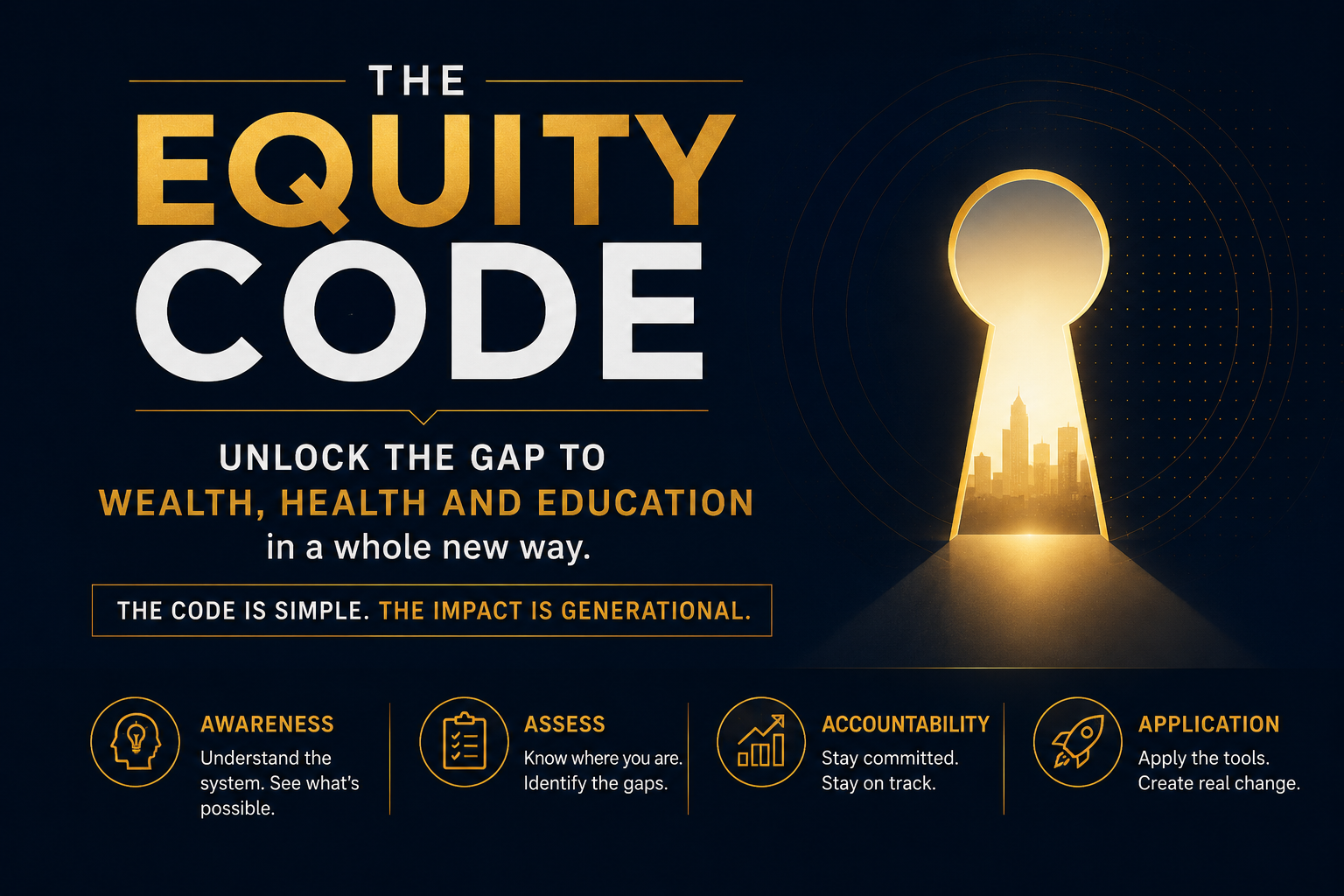
In the meantime, there is a free practical guide. It is short. It is honest. It opens with one promise — that you are not behind — and walks you through the inside-out method, the four pillars, and the four phases that take a person from outside the conversation to inside the room.
It is built the way Rob would sit with you at the kitchen table, with a couple of hours and a pot of coffee between you.
Read it slowly. Bring your fear. Bring your skepticism. Bring whichever side of the AI conversation you are on. The guide does not care which side you walked in from. It cares that you walked in.
You’re not behind. You’re right on time.
The tool is in your pocket. The wisdom is in your bones. The work is in your hands.
Step into the conversation.


Meet Your Guide…I’m Rob
Rob Cook grew up in the projects of Birmingham, Alabama, and learned early what The Equity Code is built on — that the distance between one neighborhood and another was never about intelligence. It was always about access.
He spent twenty-one years in the United States Air Force, leading elite security teams and protecting some of the nation's most senior military leaders, without ever writing a single line of code. Then he was awarded a seat at the table of an AI and technology company — not for what was on his résumé, but for who he had become over a career of holding rooms and sitting with people in their hardest moments.
He is not writing this book as an expert. He is writing it as someone who walked in not knowing, learned the language, and refuses to let anyone be told they're behind.